
EL ALAMEIN PLACES ENERGY, INVESTMENT, AND INDUSTRIALIZATION AT THE CENTER OF AFRICAN ECONOMIC TRANSFORMATION
 |
The Egyptian city of New Alamein is currently hosting a broad political, financial, and business representation from across the continent, in an event that is especially important for hydrocarbon-producing countries and for economies working on turning their natural resources into new development opportunities.
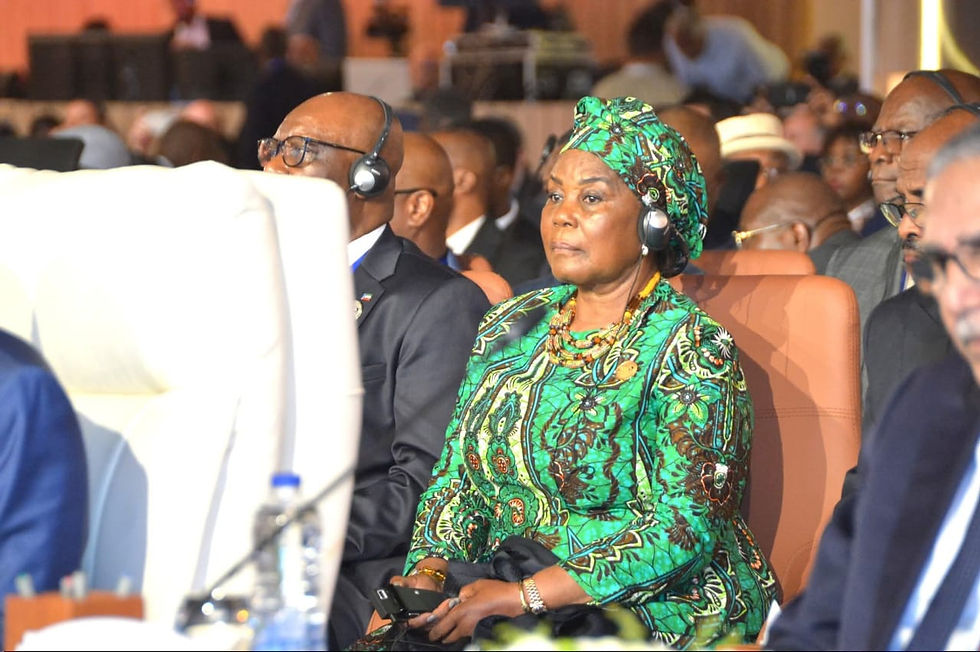
The President of the Republic, Head of State and Government, H.E. Obiang Nguema Mbasogo, accompanied by the First Lady of the Nation, H.E. Doña Constancia Mangue de Obiang, is taking part in this continental agenda alongside other African leaders, in a context focused on finding new ways of financing, economic integration, and industrialization.
The Africa-El Alamein Economic Forum, held from October 2 to 4, brings together representatives from governments, financial institutions, and the private sector with the goal of promoting investment, strengthening intra-African trade, and supporting the implementation of projects linked to the continent's development priorities. At the same time, the 8th Mid-Year Coordination Meeting of the African Union, Regional Economic Communities, and Regional Mechanisms tackles continental coordination and the implementation of Agenda 2063.
One of the main points shared during the sessions has been the need to move from having resources available to turning them into productive activity. The Chairperson of the African Union Commission, H.E. Mahmoud Ali Youssouf, emphasized the need to turn continental priorities into ready, fundable, and doable projects, while the President of Burundi and current Chairperson of the African Union, H.E. Évariste Ndayishimiye, stressed the importance of linking African resources, investment, and capabilities to generate more value within the continent itself.
In the business world, Aliko Dangote, Chairman and CEO of Dangote Group, also stressed the need to strengthen the local processing of resources and to have sufficient and competitive energy as a foundation for African industrialization. His point aligns with one of the key issues of the meeting: the need for natural resources to help develop new value chains within Africa.
For Equatorial Guinea, this conversation is of particular interest because of the importance that hydrocarbons hold in its economy and the diversification process that accompanies the evolution of its energy industry. National participation in the meeting brings together representatives from various areas of the country's economic and business activity, including Mr. Lorenzo Nicolás Mba Obama, Deputy General Manager in charge of Human Resources and Administration at SONAGAS GE; the General Director of GEPetrol; the General Director of GEPSING; the General Director of BANGE; the General Director of Holding Equatorial Guinea; and representatives from the Chambers of Commerce of Bioko and Río Muni, among others.
 |
This participation takes on special significance at a time when Equatorial Guinea is looking to strengthen investment opportunities, expand productive activity, and make better use of its existing capacities and infrastructure, in line with the Economic Diversification Program and the Horizon 2035 Plan.
From the perspective of the hydrocarbons industry, one of the most interesting aspects is the evolving role that natural gas can play in African economic development. The continental discussion points toward greater market integration, infrastructure development, energy security, and the creation of industrial activities linked to the available resources.
This evolution is especially relevant for the national gas industry. The transformation of gas into an energy source for industry, into a competitiveness factor, and into a way to generate more added value is part of the challenges that come with the development of the gas chain. In this context, regional cooperation, access to financing, and connection with new markets are becoming increasingly important.
The financial issue also occupies a prominent place. The President of Afreximbank, Dr. George Elombi, highlighted the need to strengthen the capacity of African financial institutions to mobilize resources for development projects, while the meeting emphasized the convenience of bringing together capital, companies, and governments to facilitate the execution of initiatives with continental reach.
This guidance has a direct impact on sectors like gas, energy, and infrastructure, which are characterized by high investment requirements and the need for sufficiently large markets to ensure the viability of new projects. The African Continental Free Trade Area (AfCFTA) is, in this sense, one of the tools aimed at promoting greater market integration and the development of regional value chains.
From North Africa to West, Central, East, and Southern Africa, the initiatives carried out during these meetings reflect a common concern: increasing the continent’s capacity to finance, produce, process, and market its own resources. In hydrocarbon-producing countries, this perspective goes beyond crude oil and gas production and puts industrialization, infrastructure, and the creation of added value in the spotlight.
In this context, Equatorial Guinea's participation allows it to closely follow the trends that are shaping Africa's energy and economic future. Within SONAGAS GE, the interest in these exchanges is especially related to opportunities that could contribute to the development of the gas industry, the strengthening of national capacities, and a greater connection with the continent's energy dynamics.
The agenda developed over these days concludes on October 4, after three sessions in which investment, financing, economic integration, and industrialization took center stage.
For Equatorial Guinea, the meeting represents an opportunity to closely observe the evolution of a continent that seeks to turn its resources into greater productive capacity and new economic opportunities, a process in which energy, and particularly natural gas, is expected to play a significant role.
 |  |
Source: African Union; Alamein Africa Forum; institutional and sector sources; Marketing, Communication, and Image Department of SONAGAS GE.
Photography: Information and Press Office of Equatorial Guinea.


Comments